
How to Scan a Business Card and Save It as a Contact or PDF
Key Takeaways
Digitizing your physical business cards is a straightforward process that improves networking efficiency by centralizing your contacts. Here are the most critical points for transitioning to a paperless workflow:
- Dedicated scanner apps provide the fastest OCR performance for multi-language cards.
- Native camera applications function well for occasional scans but lack robust batch processing.
- Always verify contact details captured by software to prevent errors in your CRM.
- Cloud synchronization ensures your digital address book remains accessible across various devices.
- High-quality lighting is the single most important factor for improving OCR accuracy.
Choosing the right business card scanner app
Selecting the software for your workflow often comes down to balancing ease of use with the feature set required for heavy contact volume. While many tools exist, the most effective ones combine reliable character recognition with smart export options. When you scan business card to pdf, business card scanner app, scan business cards iphone, digital business card organizer professionally, the right selection makes a difference in your long-term organization.
Proprietary versus third-party scanner apps
Proprietary apps often come pre-installed and offer tight integration with your device’s existing address books. Third-party applications frequently boast superior AI features that go beyond simple text capture, such as contact enrichment or social profile discovery.
Key features to look for in a scanner
Look for software that supports high-speed batch scanning and multiple language recognition to account for international contacts. The ability to automatically group cards by event or date helps keep your data clean and actionable over time.
Platform compatibility for scanning business cards on iPhone and Android
Cross-platform consistency is vital if you switch between operating systems throughout your professional career. Many users rely on Business Card Scanner + Reader to maintain this flexibility while ensuring their digital assets stay synced and searchable.
Comparing free versus paid scanning models
Free models often limit the number of scans or restrict export functionalities, making them better for casual users. Paid subscriptions usually include advanced capabilities like unlimited cloud storage and direct CRM synchronization for high-volume networkers.
Using manufacturer built-in features to scan business cards
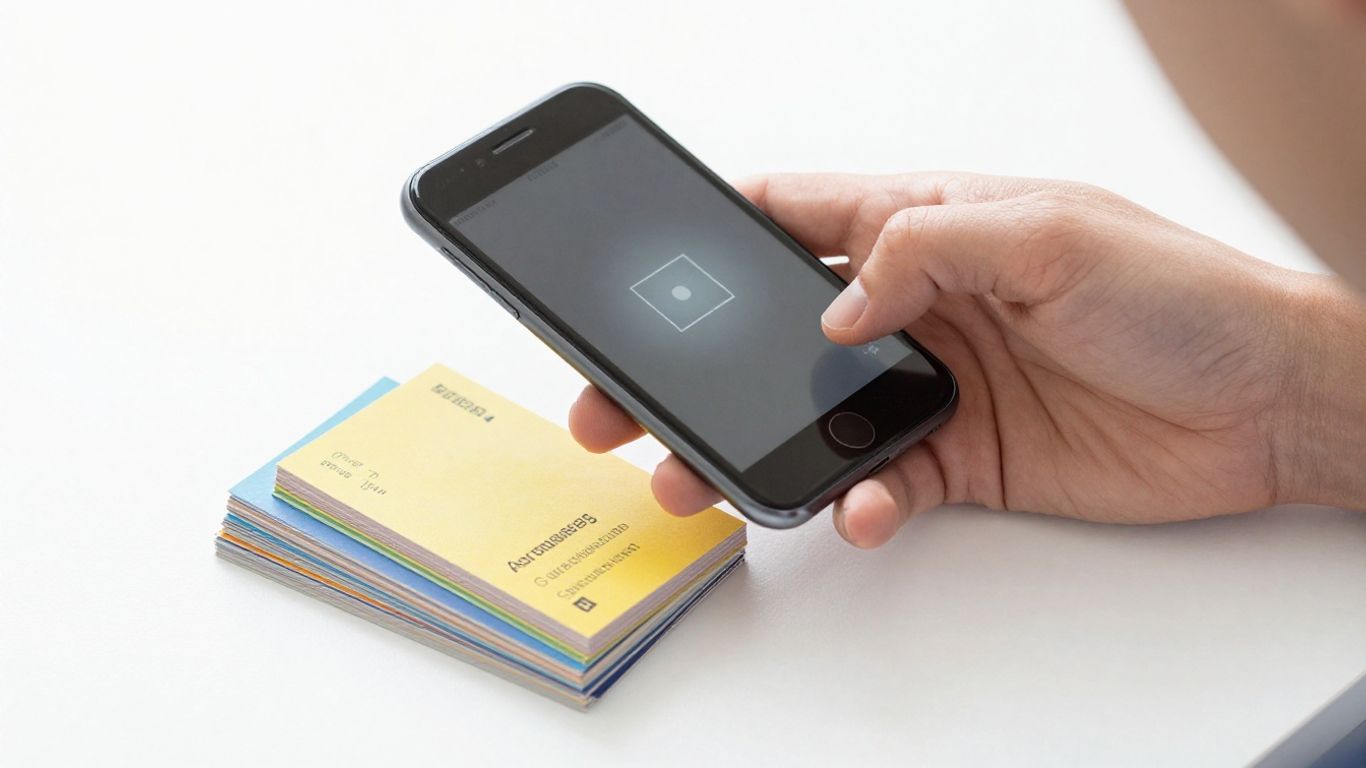
Most modern smartphones include powerful camera tools that can manage paper documents without requiring additional downloads. While these tools may lack the advanced automation found in dedicated apps, they are incredibly convenient for quick, occasional captures on the go.
Utilizing the native Notes app for scanning
Your mobile device’s native note-taking tool often includes a document scanner that effectively handles small card formats. Simply trigger the feature, align your card within the highlighted rectangle, and save the resulting file directly to your notes directory.
Scanning business cards via Google Lens
Google Lens serves as a versatile tool for extracting text directly from an image and sending it to your contacts. The ease of this method ensures that even on the fly, you can convert physical scrap into a digitized entry in your phone.
Limitations of using native camera apps versus dedicated software
Native camera apps are designed for general document ingestion rather than granular data extraction. They often lack the specialized fields for professional titles or linked social media, meaning you might have to correct the output more frequently than with ABBYY Business Card Reader.
Converting raw captures into manageable image files
After capturing a card, the software generates a high-resolution image that acts as a visual backup. Once this is done, you should immediately consider renaming the file to reflect the person or company name for easier searching if you ever lose your phone connection sync.
Steps to save business cards as digital contacts
Once an image is captured, the transformation into a usable contact is the most important part of the process. Automated systems handle the bulk of the heavy lifting, but human oversight remains essential for maintaining a high-quality database.
Leveraging OCR technology for automated contact entry
Optical Character Recognition (OCR) takes the visual data from your card and parses it into discrete fields like email, phone number, and employer. This technology reduces hours of manual typing into just seconds of processing time.
Automatically syncing data to address books and CRM systems
The ability to push contact records into your professional databases is a major time-saver for sales and marketing professionals. You can find many ways to automate these workflows through Business Card Scanner & Reader and other utilities that focus on seamless database alignment.
Performing manual verification and editing metadata
Errors in character recognition can happen, especially with ornate fonts or light-colored text on dark backgrounds. It is a good practice to review each entry and update fields, as this is a highly effective professional habit for maintaining your network data integrity.
Linking contact entries to social media profiles
Modern contact managers often search the web for profiles matching the name and company details captured from your card. This gives you extra context before your first follow-up email, turning a simple business connection into a more meaningful professional relationship.
Creating a digital business card organizer
Organization prevents your desk and your digital folders from becoming cluttered with lost data. Establishing a system that categorizes your cards as you go helps you retrieve specific details exactly when you need them for your next big meeting.
Establishing a consistent naming convention and folder structure
Using a standard format like YYYY-MM-DD-Company-Name ensures that your archives remain sorted chronologically and alphabetically. This prevents the nightmare of searching through hundreds of untitled jpegs when you need to find one specific referral.
Depending on your role, you might want to categorize your digital library based on the source of the contact or the industry vertical, as shown below:
| Folder Category | Primary Use Case | Frequency of Access |
|---|---|---|
| Prospects | Tracking active sales leads | Daily |
| Vendors | Managing supply chain contacts | Monthly |
| Networking | General industry connections | Quarterly |
Organizing your database this way allows for much faster navigation during your daily prep work. Consistency in your file management ensures that you never lose track of a potential opportunity or business partnership.
Using tags and labels for quick retrieval
Beyond folders, tagging cards with keywords like "conference," "follow-up," or "tech-sector" creates a web of accessible information. This approach is superior to deep folder nesting because it allows you to cross-reference people based on context rather than just company affiliation.
Security considerations for storing sensitive contact information
Always encrypt your digital files if they contain private client information or proprietary business connections. Using password-protected folders or local storage options can mitigate the risks associated with cloud breaches and unauthorized access.
Integrating cloud storage for cross-device access
Storing your organized digital cards in a secure cloud service enables instant access from your laptop, tablet, or phone. This ensures that you have the most up-to-date info ready whenever you send your own professional information, much like how you might scan business cards iPhone to update your primary list instantly.
Best practices for high-quality scans
Quality in equals quality out, even with the most advanced AI tools. Spending a few seconds prepping your environment before you begin capturing can save you minutes of tedious editing down the line.
Optimizing lighting to remove shadows and glare
Harsh overhead lighting often creates glare on glossy card surfaces, which obscures text. Using diffused natural light or holding the card at a slight angle can dramatically reduce these reflections and help the OCR engine read every single character clearly.
Improving focus and image stability during capture
Keep your phone steady during the capture process to prevent motion blur. You should consider:
- Placing the card against a high-contrast mat or hard surface.
- Waiting for the camera’s auto-focus to lock onto the text before clicking.
- Using a tripod or a stable surface support for batch processing.
- Cleaning your camera lens to remove any smudges or oil.
Focusing on these simple physical habits ensures that the resulting digital files are crisp and easily legible without further enhancement.
Techniques for proper cropping and document alignment
You want the card edges to be clearly detectable by your app to ensure auto-cropping works perfectly. Avoiding busy patterned backgrounds keeps the software from getting confused about where the card actually ends.
Troubleshooting common OCR character recognition errors
Sometimes, the software might confuse a zero with an "O" or a comma with a period. If you notice persistent errors, try taking the image from a flatter angle or upgrading your software permissions to a high-resolution scanning mode.
Converting and exporting business cards as PDF
PDF remains the universal standard for sharing information because it preserves the formatting of your card regardless of the device. Converting your captures into this format adds value for long-term storage and easier professional sharing.
Exporting scan data into searchable PDF documents
Many scanning apps allow you to bundle contact information and an image of the card into a single PDF. This file type is naturally searchable, making it indexable by your computer’s operating system for rapid discovery in your document archives.
Executing multi-card batch scanning to single files
Instead of saving every contact as an individual file, you can group them into a single PDF if they are related to a specific project. This makes sending a comprehensive directory of contacts to a colleague significantly more efficient than sharing separate files.
Compressing files for improved compatibility and sharing
Large images can quickly drain your data or storage limits, especially when sharing via email. Compressing your PDFs ensures that they stay under common attachment size limits without sacrificing enough visual quality to make the text unreadable.
Maintaining document resolution while managing file size
You must strike a balance between resolution and file footprint. Ensuring your final output maintains at least 300 DPI will allow a user adding a hot tub or similar major asset to clearly see the contact details on a printed page without digital noise.
Conclusion
Adopting a digital process for your business cards removes the physical clutter from your life while ensuring your contact data remains accurate and accessible. By leveraging camera technology, OCR tools, and disciplined document management habits, you will find that managing your professional network becomes a seamless part of your daily routine rather than a chore.
Frequently Asked Questions
What is the most reliable way to scan a card without losing quality?
High-resolution capture with diffused lighting provides the best results for OCR accuracy and visual clarity.
Can I keep my original physical cards after scanning?
Yes, many professionals choose to keep their physical cards as a backup while relying on the digital versions for daily contact management.
How often should I perform manual verification of scans?
It is recommended to review all captured data at the time of scanning to catch and correct immediate misinterpretations by the software.
Do I need a specific camera app to scan business cards effectively?
While dedicated scanning apps offer advanced automation, your phone's built-in camera is sufficient for most straightforward document needs.
Is it possible to share scanned cards with people who do not use the same app?
Yes, exporting your digital cards as PDFs makes them universally readable across almost all professional software and email platforms.
How can I make my business cards easier for others to scan?
Use clear fonts with high-contrast colors and avoid glossy finishes that reflect light during the photography process.
Are there risks in storing contact info in the cloud?
Digital convenience comes with security trade-offs, so it is best to use reputable cloud services with two-factor authentication enabled.